The Government has now confirmed that the New Homes Bonus (NHB) will come to an end after 2025–26, with funding being absorbed into the core local government finance settlement from 2026–27 onwards. Often viewed as disproportionately rewarding wealthier councils rather than those facing financial challenges, the removal of the New Homes Bonus marks a significant shift in how housing-related funding is distributed, as part of the wider Fair Funding Review 2.0, which will move away from specific incentive-based grants and toward a broader assessment of local authority need and resources.
However, for many local authorities, the New Homes Bonus has provided more than just a headline growth incentive. In some areas, it has also offered a practical way of supporting discretionary housing activity, including, in a small but important number of cases, the recruitment and retention of Empty Homes Officers. It is therefore entirely understandable that the announcement of its closure will be of concern to authorities that have relied upon NHB, even in part, to sustain their empty homes capacity.
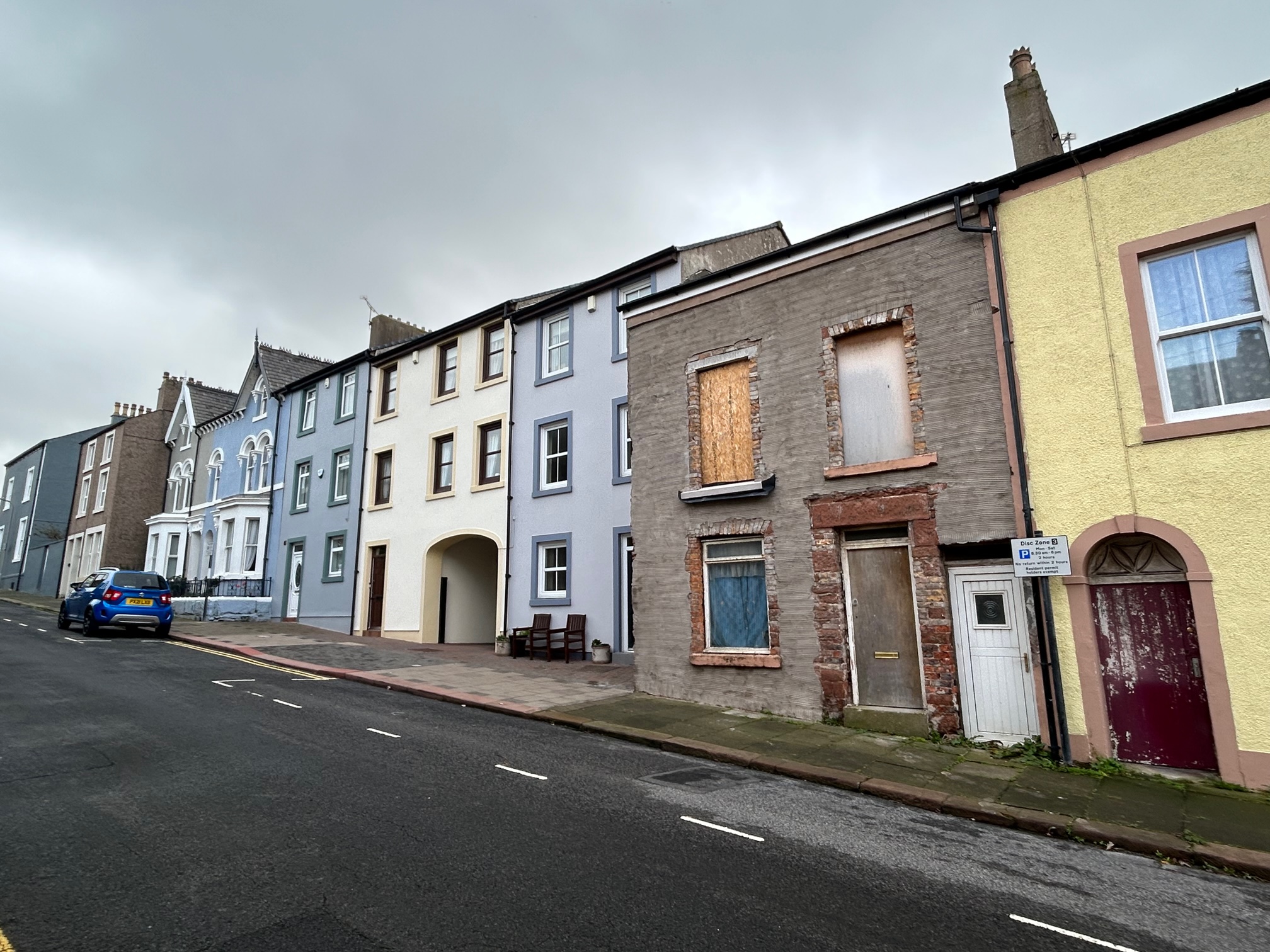
Historically, the New Homes Bonus explicitly recognised long-term empty homes brought back into use alongside new-build housing. That recognition was important. It acknowledged that returning existing homes to occupation is a legitimate and effective form of housing supply, often delivering faster results, at lower cost, and with wider neighbourhood benefits. From 2026–27, however, there will no longer be a dedicated national financial incentive that specifically acknowledges this work.
This does not mean that empty homes work has become less relevant, quite the opposite. Housing pressures are intensifying across the country. Temporary accommodation use remains high, homelessness presentations are rising, and affordability challenges continue to deepen. In this context, the ability to bring homes back into use quickly, efficiently and sustainably is not a “nice to have”; it is a critical part of the housing system.
EHN’s recent publication on using data to demonstrate the value of empty homes work arrives at a particularly important moment. The evidence is clear and consistent: well-resourced empty homes services deliver tangible financial and social returns. These include increased council tax collection, reduced costs associated with homelessness and temporary accommodation, enforcement cost recovery, and net additions to the available housing stock without the delays and infrastructure burdens associated with new development. In many authorities, empty homes teams demonstrably pay for themselves several times over.
We recognise that some authorities may now ask difficult internal questions about posts that were originally justified in part through the New Homes Bonus. Our message to members is clear: the end of NHB does not weaken the business case for empty homes work. If anything, it reinforces the need to anchor that case more firmly in invest-to-save principles, whole-system housing outcomes, and demonstrable financial returns.
One of the strongest contemporary points of leverage lies in council tax premiums on long-term empty and second homes. Across many areas, these premiums are now generating substantial and growing revenues. There is a compelling logic in aligning this income with the services that directly enable it: targeted empty homes staffing, enforcement, advice, and proactive intervention. In practical terms, this means that premium income can, and in many areas should, be used to justify the creation or expansion of empty homes officer roles, often on a cost-neutral or revenue-positive basis.
The Empty Homes Network remains fully committed to supporting authority members through this period of change. We can assist with the development of local empty homes strategies, the construction of robust business cases for new or retained posts, invest-to-save modelling using real-world evidence, and peer benchmarking with comparable authorities. Our growing body of published research is designed specifically to help members make confident, evidence-led arguments within challenging financial environments.
While the ending of the New Homes Bonus removes a visible and familiar funding stream, it does not diminish the fundamental importance, effectiveness, or value of empty homes work. The national housing context makes this work more, not less, essential. As always, EHN will continue to advocate for the sector, support practitioners, and make the strongest possible evidence-based case for sustained and enhanced investment in bringing empty homes back into use.